Plant and equipment hire
Plant and equipment hire sits at the point where programme pressure, site safety and transport costs all meet. At Interbuild Africa, this sector gives builders, developers and professional teams a place to compare compact machines, access options, scaffolding systems and everyday site tools in one hall.
What this sector covers on the expo floor
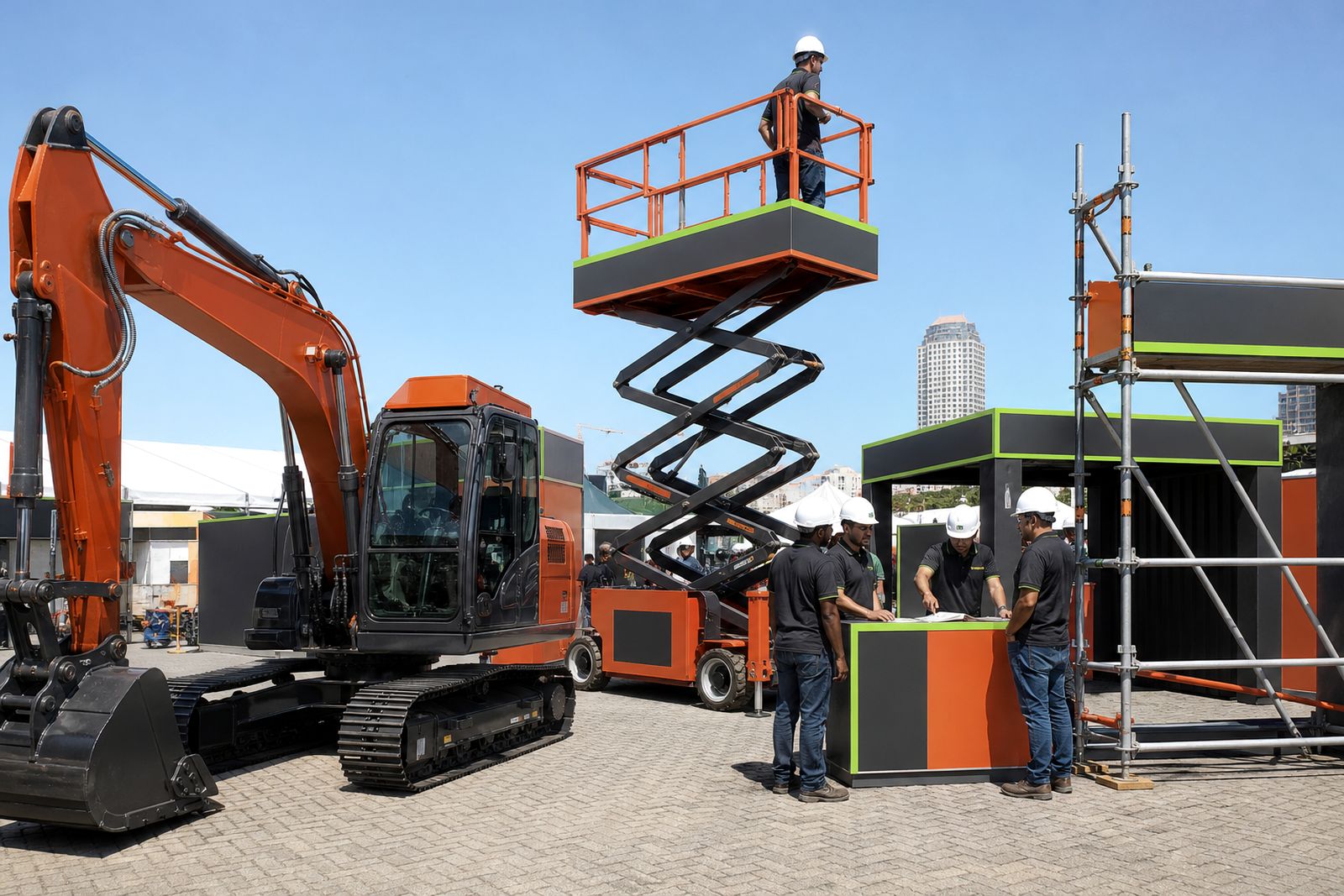
The plant and equipment hire sector at Interbuild Africa is aimed at trade visitors who need a better read on what is practical for South African sites, not just what looks capable on paper. You will see exhibitors covering compact earthmoving plant, slab and trench compaction equipment, concrete handling tools, small power equipment, mobile access units, modular scaffolding and general site support items used during shell work, fit-out and maintenance.
For a builder in Johannesburg, one of the useful parts of this section is the chance to compare equipment classes side by side. A machine that suits a warehouse extension in Midrand may be the wrong choice for a tight suburban infill site in Randburg where boundary walls, paving and street access are constant constraints. The same goes for access equipment. Indoor work under finished soffits needs different reach, tyre type and guarding from rougher outdoor work on a fresh site.
- Compact loaders and mini excavating equipment for confined sites
- Access equipment for internal installation, glazing, maintenance and roofing support
- Scaffolding systems for façade work, painting, bricklaying and edge access
- Portable tools for demolition, mixing, cutting, drilling and finishing work
- Temporary site equipment used to keep daily operations moving
Matching equipment to the actual site, not the tender summary
One of the common problems on building jobs is that plant is chosen too early from a broad description rather than from the site conditions that will control movement and output. Drawings may show metres and levels, but they often do not capture turning circles near stock piles, surface conditions after rain, delivery vehicle limits or the awkward route from gate to work face. That gap matters. A machine can be technically suitable and still waste time every day.
Trade visitors usually get more value from this sector when they compare equipment against a real task list. Instead of asking only about rated capacity, ask how the unit behaves on compacted fill, paving, suspended slabs or damp ground. Ask what space is needed for loading and unloading, what tyre or track choices are sensible, and how the equipment is supported when a project moves from external works to enclosed areas. Those questions usually get closer to the truth.
- Access width at gates, passages and between existing structures
- Ground condition in summer storms and on recently backfilled trenches
- Ceiling height, slab loading and floor finish protection indoors
- Noise limits where occupied buildings remain in use
- Transport practicality between Johannesburg sites and outlying towns
Access equipment and scaffolding under local site pressure
Access choices can shape both safety and programme control. On a commercial fit-out, a compact indoor access unit may reduce repeated ladder work and limit damage to finished floors, but only if floor loading, turning space and battery charging arrangements have been considered. On roofing and façade work, scaffold planning still needs careful thought around ties, loading bays, edge protection and how materials are moved up and down the structure.
In Gauteng conditions there is also the matter of dust, afternoon weather shifts and fast changes between hot dry days and summer downpours. Outdoor scaffold decks and access routes need sensible housekeeping because mud and loose rubble travel quickly through a site. Visitors speaking to exhibitors in this sector often focus on reach and platform height, but practical issues such as storage footprint, transport length and daily inspection points are just as important. Those are the details that stop small delays from becoming a full lost day.
A workshop example from a real building week
Consider a small steel and maintenance workshop supporting several building teams across Johannesburg. It is not a plant yard and it does not keep a huge fleet. The workshop handles handrails, gate repairs, roof steel alterations and occasional support brackets for glazing and screening. On paper, the jobs look minor. In practice they land across schools, retail sites and office parks with different access rules, security procedures and loading areas.
During one week the workshop needed compact lifting support for unloading steel lengths at a cramped rear service lane, a mobile access solution for fixing brackets under a canopy, and modular scaffold for a short run of façade repairs where public walkways had to stay open. The lesson was not simply to get more equipment. It was to align each item with the task, route and surface before the vehicle left the yard. One wrong assumption on width or reach would have meant a second trip across town, and Johannesburg traffic does not forgive that kind of planning miss.
That example is why this expo sector matters. Builders and professional teams can test assumptions before they lock in site methodology. A compact machine, access unit or scaffold system is only useful when it fits the building, the gate, the programme and the people using it.
Questions trade visitors should put to exhibitors
A worthwhile floor conversation goes beyond catalogue specification. The better questions tie the equipment to programme control, operator practicality and site risk. If you are reviewing options for a live project, carry dimensions, approximate lift requirements, photos of approach routes and notes on where materials will be staged. That makes discussions far more useful.
- What is the true working footprint once guardrails, outriggers or loading zones are included?
- How is the equipment moved on and off site where truck access is restricted?
- Which attachment or platform options change the job output in a meaningful way?
- What checks should the site team plan for at handover and during use?
- How does the equipment suit indoor floors, paved yards or uneven external ground?
- What support items are often forgotten, such as boards, barriers or storage needs?
For quantity surveyors and developers, these questions help when reviewing whether a proposed methodology is realistic. For architects and contract administrators, they also help when temporary access could affect finishes, occupied areas or façade sequencing.
Where this sector fits in the wider show
Plant and equipment hire does not stand alone. It links directly with building materials and roofing, glazing systems, and the show programme where practical demos and professional talks add context to the kit on display. A visitor comparing access methods for envelope work may also want to look at the glazing and roofing sectors. A team reviewing compact equipment for tight urban projects may pick up useful points from compliance discussions in the programme.
Interbuild Africa brings those strands together for builders, architects, quantity surveyors and developers who need a better technical picture before a project moves from tender notes to a live site. If your work involves constrained access, temporary works, short-duration maintenance or staged fit-outs, this sector is one to plan for carefully. Registration and exhibitor participation are handled through our contact form.
What our Construction customers say
Verified Google reviews
Questions we get asked
Who should visit the plant and equipment hire sector?
This sector is useful for builders, developers, architects, quantity surveyors, contract administrators and operations teams comparing practical site equipment options for current or planned projects.
Will the show include both access equipment and scaffolding?
Yes. The sector covers a broad spread of temporary access solutions, including mobile access equipment, modular scaffolding and related site support items used on construction, maintenance and fit-out work.
Can exhibitors in this sector help with small urban sites as well as larger projects?
That is one of the main reasons to visit. Compact plant and access options are often most valuable where gates are narrow, turning space is limited and nearby finishes or occupied areas need extra care.
Also worth a look
Tell us about the job
Send sizes, materials and where you are through our contact form, and we will come back with the practical options.
Open the contact form